Dry Powder Magnetic Separators
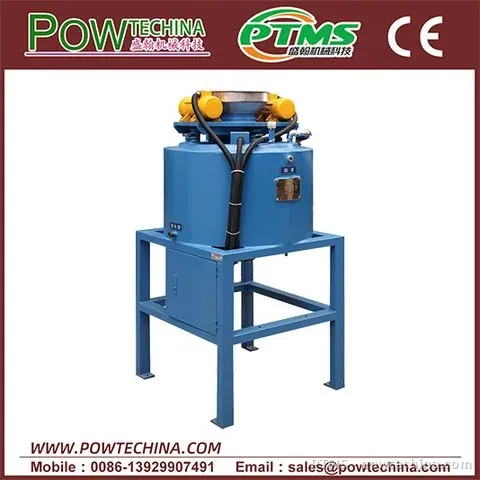
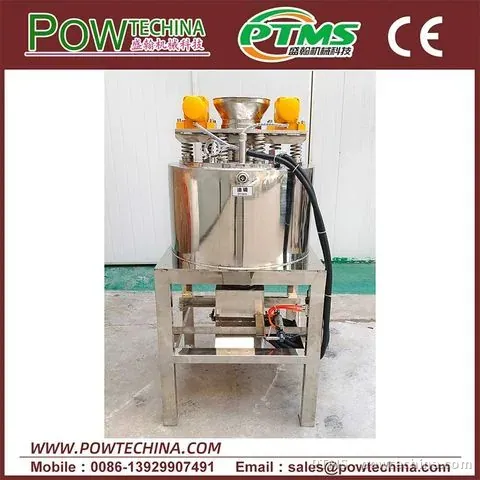
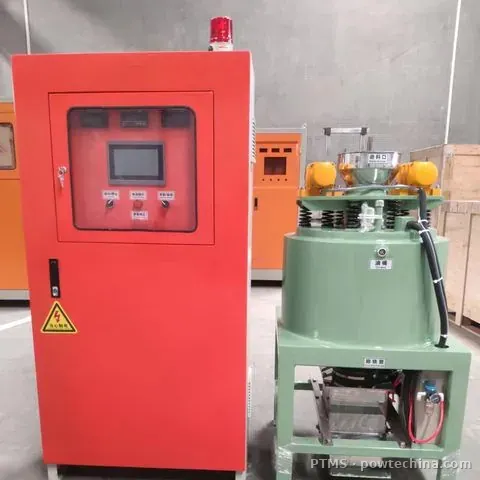
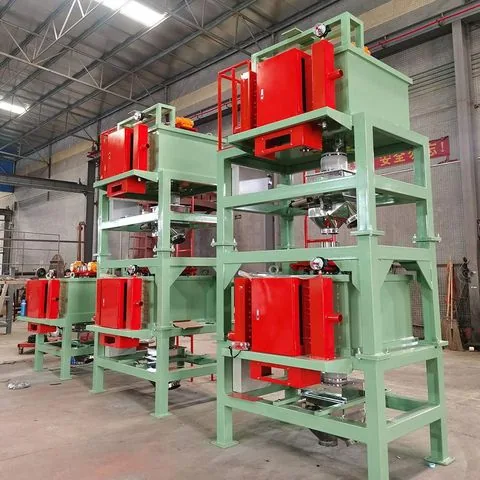
Dry Type Magnetic Separator for Powder
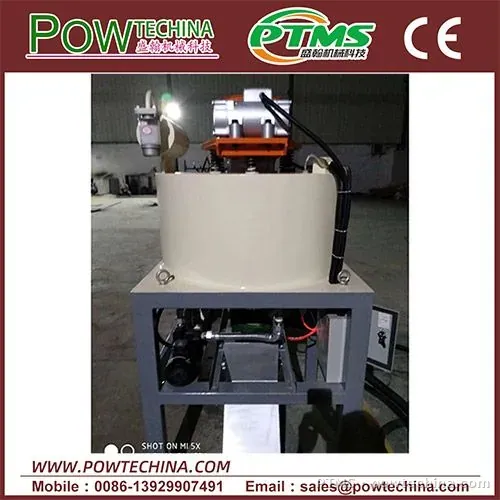
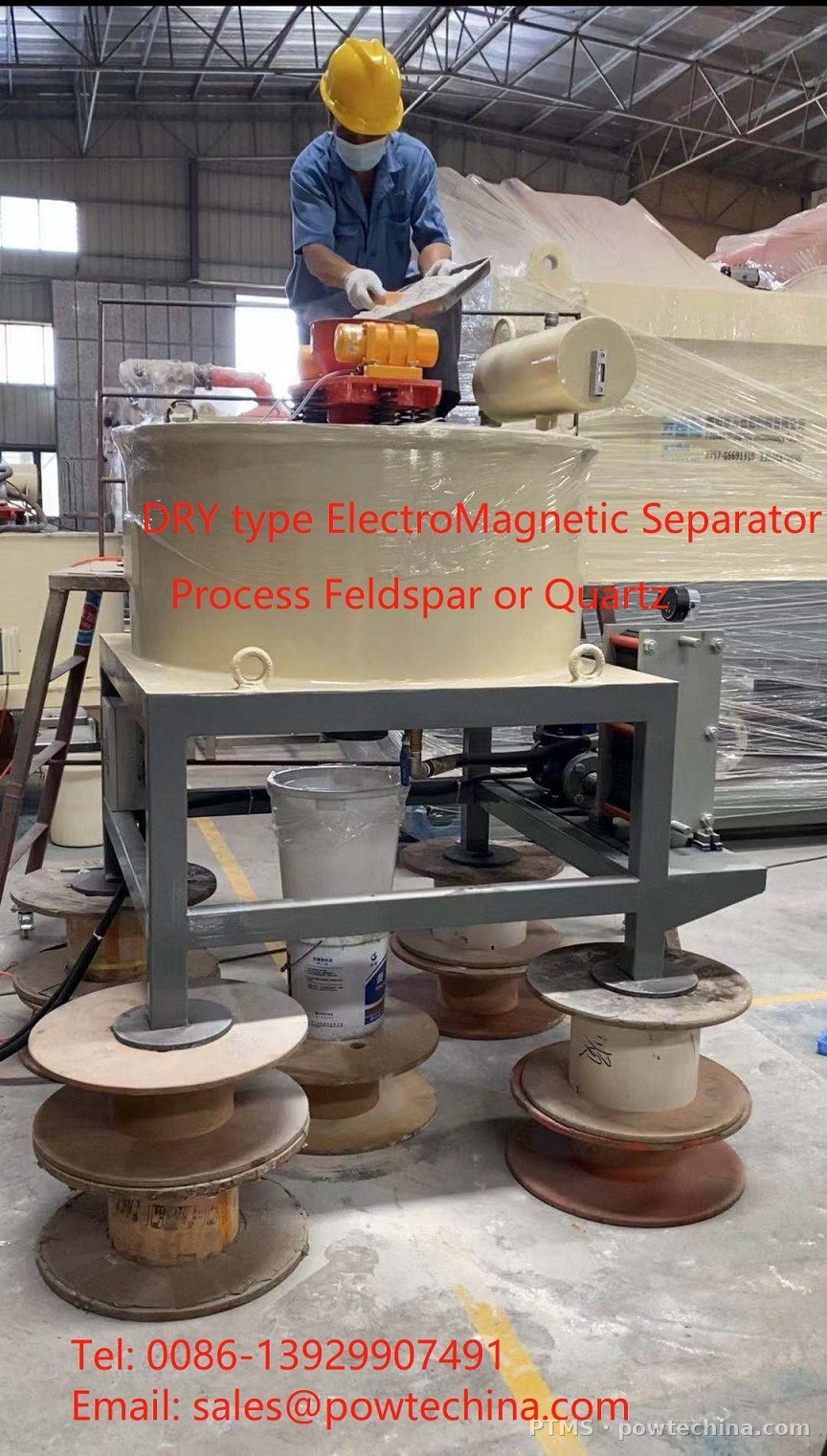
Dry Type Magnetic Separator for Powder by PTMS (Foshan Powtech). Dry electromagnetic separators for free-flowing powders such as quartz powder, feldspar powder, bentonite, lithium battery cathode and anode materials, graphite and activated carbon.
- Free 5–10 kg sample test before you order, report in 5 days
- 24-hour burn-in test on every unit before shipment
- Installation guidance and remote support for overseas buyers
Specifications
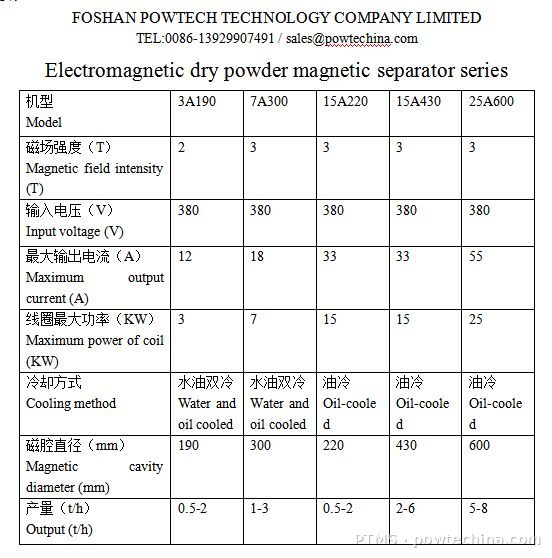
Detailed technical parameters for the Dry Type Magnetic Separator for Powder are provided per project on request; contact us for the current datasheet. Dry electromagnetic separators for free-flowing powders such as quartz powder, feldspar powder, bentonite, lithium battery cathode and anode materials, graphite and activated carbon.
| Parameter | Value |
|---|---|
| Magnetic field strength | Available on request |
| Capacity / throughput | Available on request |
| Coil or motor power | Available on request |
| Input voltage | Available on request |
| Cooling method | Available on request |
| Dimensions & weight | Available on request |
Specifications for this item are available on request. Contact us for the datasheet. We configure each machine for your material after a free sample test.
Product details
PTMS Magnetic Separator Series dry type magnetic separator
PTMS Magnetic separator magnetic separation process is in the magnetic field of the magnetic separator, with the help of magnetic force and mechanical force on the action of ore particles to achieve separation.Different magnetic ore particles move along different trajectories and are thus separated into two or more separate mineral processing products. The track of the recovered magnetic particles is determined by the ratio of the magnetic force acting on the magnetic particles to the mechanical force, while the track of the non-magnetic particles is determined by the mechanical force.
In order for the magnetic separator to work normally during the magnetic separation process, the magnetic force should be greater than the mechanical force and overcome the resultant force of the magnetic inertia in motion. According to the magnetic classification, mineral materials can be divided into two categories: diamagnetic materials and paramagnetic materials.Minerals can be classified according to the magnitude of specific magnetic susceptibility from the perspective of magnetism, and generally can be divided into the following four categories: 1. 2. Medium magnetic minerals: the specific magnetic susceptibility is greater than 600×10ˉ6 cm /g ~ 3000×10ˉ6 cm /g, which can be recovered by medium magnetic separators of 0.3 ~ 0.6T (namely 3000GS~6000GS), such as pseudo-hematite. 3, weak magnetic minerals: than the magnetic susceptibility greater than 15×10 6 cm /g ~ 600×10 6 cm /g, can use 0.6 ~ 1.8t (also is 6000GS~18000GS) of strong magnetic separators to recover, such as manganese ore, manganese carbonate, manganese oxide, metallurgical manganese ore, ilmenite, limonite, wolframite and so on. 4. Non-magnetic minerals: substances with a specific magnetic susceptibility greater than <15×10ˉ6 cm /g, such as scheelite, cassiterite and non-metallic quartz, calcite, etc.
According to the working principle of magnetic separator, according to the way of ore: upper ore, lower ore; Dressing environment: dry, wet; Magnetic field generation: electromagnetic induction, permanent magnetic block. Ore size: coarse, medium and fine; Magnetic separators: flat ring, vertical ring, cylinder, roller, disk, belt and so on and produce a variety of types of complex, diverse magnetic separators.