Key takeaways
- Turkey (Türkiye) is one of the world’s most important suppliers of industrial minerals. For 2024, USGS ranks it second worldwide for feldspar (~17% of world output) and perlite (~30%), third for bentonite (~13%), and eighth for kaolin (~4.1%).[1]
- Feldspar is the flagship export. Turkey produced an estimated 5.3 million tonnes in 2024, and feldspar exports were valued at about US$260 million. Sodium feldspar (albite) comes mainly from the Çine–Milas belt of Aydın and Muğla in the southern Menderes Massif.[1][4]
- Colouring impurities set the price. Fe2O3-bearing minerals such as mica, tourmaline and garnet can be reduced by magnetic separation and flotation. TiO2 minerals such as rutile and sphene are essentially non-magnetic. In a published test on Muğla albite, wet magnetic separation cut Fe2O3 sharply but left TiO2 almost unchanged.[3][5]
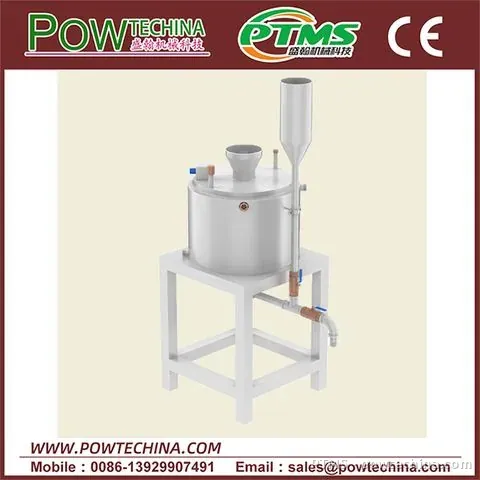
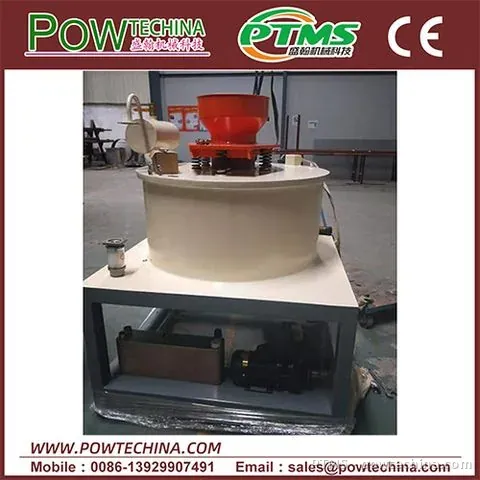
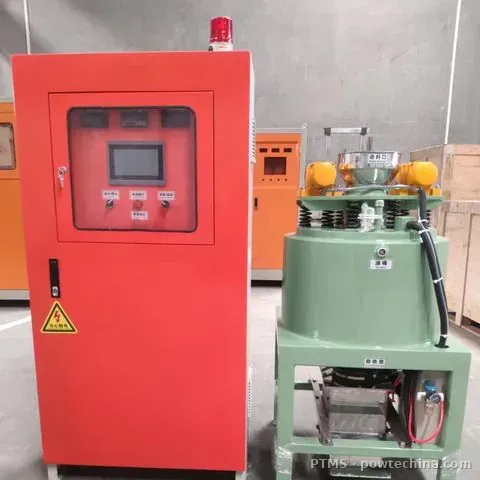
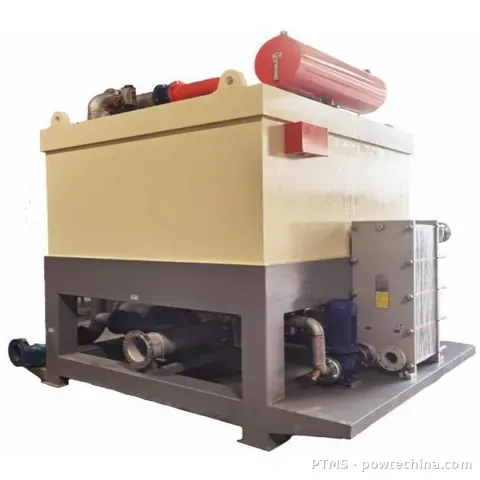
- Wet slurry electromagnetic separators suit kaolin washing, wet-milled feldspar and ceramic slip or glaze. Dry powder electromagnetic separators (PT3A160, PT20A600, PT25A600, PT1000) suit dry-milled feldspar, quartz powder, bentonite and perlite. To check your ore, send PTMS 5–10 kg for a free test. The report comes back within 5 days of receipt.
Turkey’s non-metallic mineral industry at a glance
Turkey’s geology, with large granitic and metamorphic massifs in western Anatolia and widespread young volcanism, gives it an unusually broad industrial-minerals base. USGS reports that in 2024 Turkey was the world’s leading producer of boron (excluding the United States) and of pumice (~48% of world output). It was second for feldspar, perlite and natural soda ash, third for bentonite, fourth for industrial sand and gravel, seventh for talc and pyrophyllite, and eighth for kaolin and zeolites.[1]
Much of this output is exported. According to the Turkish Ministry of Trade, about 90% of feldspar production is sold abroad, and in 2017 Turkey held the largest share of world feldspar exports (47.1%).[2] USGS notes that Turkey supplied about 93% of United States feldspar imports in 2021–2024.[1] Export buyers in ceramics and glass set tight Fe2O3 and whiteness limits. That is the commercial case for efficient iron removal on Turkish lines.
| Mineral | Main regions and deposits (as named in sources) | Main industrial uses | Sources |
|---|---|---|---|
| Feldspar (Na and K) | Sodium feldspar (albite) in the Çine–Milas–Söke–Yatağan–Karpuzlu area (Aydın, Muğla), southern Menderes Massif. Other important reserves: Manisa–Demirci and Kütahya–Simav. Producers named by USGS operate in Aydın, Bursa, Eskişehir and Muğla | Ceramic tile, sanitaryware and porcelain bodies, glazes, glass; also paint and welding electrodes | [1] [2] [3] [4] |
| Kaolin | Istanbul (Şile–Kilyos), Balıkesir (Sındırgı, Ayvalık, İvrindi, Gönen), Kütahya (Altıntaş, Emet), Konya (Doğanhisar), Nevşehir (Avanos), Eskişehir (Mihalıççık), Giresun (Bulancak), Çanakkale; new MTA finds in Bayburt and Artvin | Ceramics (tile, vitrified ware, insulators), white cement, paper, paint, fillers | [8] [9] [10] |
| Quartz / silica sand | Turkey ranks fourth in world industrial sand and gravel (2024). Thrace and the Istanbul area (for example Çatalca) are studied silica-sand sources | Glass, ceramics, foundry, construction | [1] [7] |
| Bentonite | Edirne–Enez, Çankırı, Çanakkale, Kütahya, Manisa, Tokat–Reşadiye, Ankara–Kalecik, Ordu–Ünye–Fatsa, Giresun–Tirebolu | Drilling mud, foundry binder, iron-ore pelletising, bleaching earth, cat litter | [1] [12] |
| Perlite | İzmir (Cumaovası, Bergama–Dikili), Erzincan and Kütahya lead production; also Manisa, Eskişehir, Konya, Nevşehir | Expanded perlite for construction, filter aids, horticulture, industrial fillers | [1] [13] [14] |
| Talc, pyrophyllite, mica, zeolites and others | USGS lists Turkish production of talc, pyrophyllite, mica, zeolites, diatomite and sepiolite | Ceramics, paper, plastics, paint, absorbents | [1] |
Region names follow the cited USGS, MTA, Ministry of Trade and İMİB sources. Production figures vary by year and by how each source groups commodities.
Mineral by mineral: quality, and why iron is the problem
Sodium and potassium feldspar
USGS estimates Turkish feldspar output at about 5.3 million tonnes in 2024, down 14% on 2023, after a peak of about 9.7 million tonnes in 2022.[1] The Ministry of Trade puts visible and potential reserves at about 239 million tonnes and lists Manisa–Demirci, Kütahya–Simav, Aydın–Çine and Muğla–Milas as the most important areas.[2]
Most Turkish feldspar is sodium feldspar. An MTA Bulletin study counts about 250 albite occurrences in the Çine submassif. They sit in meta-pegmatites along NNW–SSE tectonic zones of the southern Menderes Massif, and the study reports production of about 1.7 million tonnes per year of Na-feldspar from the Çine–Milas–Söke–Yatağan–Karpuzlu area.[4] MTA defines K-feldspar as material with more than 10% K2O and Na-feldspar as more than 7% Na2O.[3]
MTA lists mica (muscovite, biotite), tourmaline and garnet as the main quality-reducing minerals, which can be reduced economically by flotation and magnetic separation. It also notes that few occurrences are directly suitable for glass and ceramics because of iron-bearing minerals.[3] Published work on Çine and Muğla albite shows the two colouring oxides that matter:
- Fe2O3: a Çine ore from a commercial plant contained 0.103% Fe2O3 (with 0.358% TiO2), and a Muğla low-grade ore about 0.10% Fe2O3 (with 0.36% TiO2).[5][6]
- TiO2: in Turkish albite it sits largely in rutile and sphene. These minerals have very low magnetic susceptibility, so magnetic separation does not remove them and flotation is used.[5]
Kaolin
Turkey produced about 2.0 million tonnes of kaolin in 2024, according to USGS.[1] An MTA bulletin estimates a national kaolin potential of 89 million tonnes at 15–37% Al2O3. Because of impurity problems, only about 35 million tonnes is workable good-quality ceramic kaolin. The same paper notes that Turkish ceramic plants blend imported higher-alumina clays with lower-grade local kaolin.[8]
The impurities differ from deposit to deposit:
- Alunite and sulphate. Many Turkish kaolins formed by hydrothermal alteration of volcanic rocks. They often fire white thanks to low Fe2O3 but carry high SO3 from alunite, which limits some of them to white cement.[9] Alunite is not magnetic, and magnetic separation will not remove it.
- Iron oxides and pyrite. Çanakkale and Balıkesir kaolins contain kaolinite, quartz or cristobalite and feldspar, with small amounts of hematite and/or alunite.[10] A thesis on a pyritic Çanakkale kaolin reported 2.17% Fe2O3, reduced to 1.20% by flotation, and suggested magnetic separation of hydrocyclone products as a further step.[11]
- Iron in new prospects. In the new Bayburt–Darıca field, MTA drilling averaged about 6.1% Fe2O3, and XRD identified hematite and magnetite among the accompanying minerals.[8]
MTA concludes that Turkey has a large gap in kaolin refining (washing) plants and needs new capacity for the paper and ceramic sectors.[8] Wet high-gradient electromagnetic separators are one of the standard tools in such plants.
Quartz, silica sand and glass sand
USGS reports about 1.47 million tonnes of quartz industrial sand in 2024, in addition to a larger volume of unspecified industrial sand. That makes Turkey the world’s fourth-largest producer of industrial sand and gravel.[1] For glass, the iron limit is tight. In a published study of Çatalca (Istanbul) silica sand, magnetic separation lowered iron content from 0.41% to 0.06%, slightly better than flotation (0.08%), and the author presented magnetic separation as a chemical-free alternative.[7]
Iron arrives as heavy minerals, iron-stained grains and wear iron from crushers. Magnetic separation is normally placed before any acid leaching, so that tramp iron does not oxidise and stain the sand.
Bentonite, perlite, talc and other minerals
Bentonite. USGS reports about 2.5 million tonnes of bentonite in 2024, putting Turkey third worldwide.[1] The Istanbul Mineral Exporters’ Association (İMİB) puts reserves at about 240 million tonnes. It notes that Ca-bentonite for bleaching and cat litter forms large deposits at Ordu–Ünye–Fatsa, that Çankırı bentonite is used as foundry bentonite, and that Tokat–Reşadiye supplies pelletising and drilling grades.[12] In white and detergent bentonites, iron-bearing grains and tramp iron create dark specks. Dry powder electromagnetic separators can remove these without adding water.
Perlite. Turkey ranks second in world perlite production (~30%, 2024).[1] İMİB cites total resources of about 5.7 billion tonnes (57 million tonnes visible), with major deposits at Cumaovası, İzmir–Bergama–Dikili, Manisa–Soma, Eskişehir, Kütahya, Konya and Erzincan.[13] MAPEG-based data show that İzmir, Erzincan and Kütahya accounted for about 88% of 2024 production.[14] For filter-aid and filler grades, removing magnetic dark grains from crushed or micronised perlite can improve appearance.
Talc, pyrophyllite, mica, zeolites. USGS lists smaller Turkish outputs of talc (about 20,000 t in 2024), pyrophyllite (about 284,000 t), mica, zeolites, diatomite and sepiolite.[1] Where they go into ceramics, paper or plastics, the same dry powder iron-removal logic applies.
Why iron and ferromagnetic impurities hurt quality
- Fired colour and black spots. Turkish feldspar and kaolin go mainly into tile, sanitaryware and porcelain. Iron darkens the fired body and glaze, and metallic iron particles cause black spots after firing.
- Glass colour. Iron tints glass green and cuts light transmission, so glass-grade feldspar and sand carry strict Fe2O3 limits.
- Whiteness and brightness. Hematite, goethite and iron-bearing mica lower the whiteness of kaolin, feldspar, bentonite and fillers.
- Export price. Because most feldspar is exported, a lower-iron grade can open better-paying ceramic and glass markets.
What to expect from electromagnetic separation: typical, ore-dependent ranges
Magnetic separation removes only the iron that magnets can capture, and its effect depends on how that iron occurs:
- Usually well removed: liberated magnetite and hematite, goethite or limonite; iron-bearing silicates such as biotite, tourmaline and garnet; wear iron from crushers, mills and pipes.
- Removed only partly: thin iron coatings and iron locked inside other grains.
- Not removed: iron inside the crystal lattice of kaolinite, smectite or talc; non-magnetic minerals such as rutile, sphene and alunite.
The table gives indicative ranges from high-gradient magnetic separation practice and the published Turkish tests cited above. They are not guarantees. Results vary by ore, and each case must be confirmed with a pilot test report on your own material.
| Material | What the separator can capture | Typical outcome (indicative) | Main limits |
|---|---|---|---|
| Na/K feldspar (wet or dry) | Biotite, muscovite with iron, tourmaline, garnet, free iron oxides, tramp iron | Fe2O3 typically about 30–70% lower where iron minerals are liberated. A laboratory wet test on Muğla albite reached about 90% Fe2O3 removal (0.10% to 0.010%)[5] | TiO2 (rutile, sphene) is not reduced by magnets. Where TiO2 matters, flotation is needed; results vary by ore and are confirmed by the pilot test report |
| Kaolin (wet slurry) | Free hematite, goethite, magnetite, iron-bearing mica, tramp iron | Fe2O3 typically about 20–60% lower than the feed where free iron dominates; whiteness gain of a few points | Alunite/SO3 and structural iron stay; pyrite may need flotation; some clays need bleaching after magnets |
| Silica sand / quartz powder | Heavy minerals, iron-stained grains, crusher iron | Fe2O3 typically about 20–50% lower, more where iron is free; a Çatalca study reported 0.41% to 0.06% iron[7] | Surface staining and inclusions may still need scrubbing or leaching |
| Bentonite, perlite, talc powder (dry) | Iron-bearing grains, tramp iron, magnetic dark specks | Cleaner product with fewer dark specks; colour gains usually modest | Lattice iron stays in the product |
| Ceramic slip and glaze (wet) | Free iron and fine magnetic particles from raw materials and equipment | Typically fewer black spots after firing and a higher first-quality yield | Iron dissolved in frits or locked in raw materials is not affected |
Turkish research also shows why magnets and flotation complement each other. On Çine feldspar, reverse flotation with a combined collector system lowered Fe2O3 from 0.103% to 0.018% and TiO2 from 0.358% to 0.135%.[6] On Muğla albite, the wet magnetic separator matched flotation on Fe2O3 with the highest mass yield, but did not lower TiO2.[5] For ores where iron is the main problem, a magnetic stage can cut reagent use or replace part of the flotation circuit. Whether it can do so for your ore depends on the test.
How wet slurry and dry powder electromagnetic separators upgrade Turkish feldspar, kaolin and quartz
How an electromagnetic slurry separator works
An electromagnetic slurry separator is a wet high-gradient magnetic separator (HGMS).[15] It works in a repeating cycle:
- A copper coil magnetises a stainless-steel matrix (steel wool or grid) inside the separator canister. The matrix concentrates the field into steep gradients.
- Slurry flows through the matrix. On PTMS A-series iron removers it enters at the bottom and leaves at the top (counter-current). Weakly magnetic particles stick to the matrix, and cleaned slurry flows on.
- When the matrix is loaded, valves switch, the coil turns off and flush water discharges the iron. The matrix keeps no residual magnetism, so cleaning is complete.
Field strength, matrix type, flow speed and cycle time are the four main settings. Dry electromagnetic powder separators apply the same idea to free-flowing powder. Material falls or vibrates through a magnetised zone, and the captured iron is discharged automatically.
Process flow for Turkish sodium feldspar (dry and wet lines)
Many Turkish feldspar plants ship ground or granular products, so dry processing is common. A typical dry line runs:
- Crushing and screening of run-of-mine albite.
- Permanent-magnet or belt-type roller separation of granules (about 0.1–10 mm) to remove tramp iron and coarse mica, biotite and tourmaline.
- Dry grinding and air classification to the ceramic or glass size.
- Dry powder electromagnetic separation (PT3A160, PT20A600, PT25A600 or PT1000, chosen after testing) to capture fine weakly magnetic minerals.
A typical wet line runs: crushing → wet grinding → desliming → permanent-magnet pre-separation → electromagnetic slurry separator → dewatering, with flotation added where TiO2 must also come down. Placing the magnetic stage before flotation removes mill iron and much of the iron-bearing minerals, which can lower the load on the flotation circuit.
Process flow for Turkish kaolin
- Dispersion of crude kaolin in water.
- Classification with hydrocyclones or spiral classifiers to reject quartz, cristobalite and unaltered feldspar.
- Screening to protect the separator matrix.
- Electromagnetic slurry separation at high field to capture fine iron oxides and iron-bearing mica. A permanent-magnet stage can go first if tramp iron is heavy.
- Automatic flushing of the matrix, with the iron-rich fraction sent to tailings.
- Optional flotation or bleaching where pyrite, structural iron or very fine oxides remain.
- Dewatering (filter press) and drying.
Process flow for silica sand and quartz
Crushing (for quartz rock) → washing and attrition scrubbing → classification → magnetic separation:
- Belt-type rare-earth roller separators for granules of about 0.1–10 mm
- Dry electromagnetic powder separators (PT3A160–PT25A600, PT1000) for fine quartz powder
- Wet slurry separators on wet lines
Place magnets before any acid leaching so that crusher iron does not oxidise and stain the sand.
Bentonite, perlite and ceramic slip or glaze
- Bentonite, perlite and talc powders: dry electromagnetic powder separators, with no water added and no extra drying step.
- Tile, sanitaryware and tableware plants: wet electromagnetic separators on glaze and body slip remove fine iron just before use and cut black spots after firing. With Turkish feldspar and kaolin feeding a large ceramic sector, glaze and slip iron removal is a natural high-volume application.
Wet or dry: how to choose
| Question | Wet slurry separator | Dry powder separator |
|---|---|---|
| What form is your material in? | Already a slurry: kaolin washing plants, wet-milled feldspar, flotation feed or product, ceramic slip and glaze | Dry, free-flowing powder or granules: dry-milled albite or quartz, bentonite, perlite, talc, dried glass sand |
| Particle size | Fine slurries; as a published PTMS reference, the 7A160 Wet Magnet is rated for slurry below 40 mesh | Fine powder in electromagnetic powder machines; 0.1–10 mm granules on belt-type roller separators |
| Fine, weakly magnetic iron | Best choice: particles are dispersed and the high-gradient matrix catches very fine iron | Effective on dry powder, but material must stay dry and free-flowing |
| Water and drying | Needs process and flushing water; product must be dewatered | No water and no extra drying step, which suits dry feldspar grinding plants |
Choosing field strength, cooling and matrix
- Field strength. Tramp iron is caught at low field. Weakly magnetic minerals such as biotite, tourmaline, garnet and goethite need a high-intensity field plus a high-gradient matrix. Published PTMS figures:
- A65K750J (750 mm cavity) and A40K530J (530 mm cavity) slurry iron removers: 0–20,000 GS, adjustable
- 7A160 Wet Magnet: about 30,000 GS theoretical
- Electromagnetic Dry Powder Magnetic Separator Series: PT20A600 published at 2.5 T, 600 mm cavity, water + oil dual cooling, about 2–4 t/h; PT3A160, PT25A600 and PT1000 configured per ore after testing
- Dry Magnet 3A160 for smaller dry powder lines
- Cooling. Continuous high-field operation heats the coil, and hot Aegean summers make cooling important. The A65K750J is oil-cooled, the A40K530J uses combined oil and water cooling, and water-cooled designs such as the 750 Water Cooling Wet Type Magnet and Electromagnetic Slurry Magnetic Separator Type 1000 (PT1000 class) keep the field stable over long shifts.
- Matrix. Fine kaolin and feldspar slurries generally use fine steel wool matrix or a dedicated kaolin and feldspar matrix. Coarser feeds use grid matrices. Screening ahead of the separator protects the matrix.
- Capacity. Throughput depends on solids content, particle size and target iron level. PTMS confirms the model size after the sample test rather than quoting a generic t/h figure.
PTMS models to shortlist for Turkish plants
- Sodium and potassium feldspar: Potassium Sodium Feldspar Magnetic Separator and the 750 water-cooled model for wet lines; dry electromagnetic models PT3A160, PT20A600, PT25A600 and PT1000 for dry powder lines (dry powder series, 3A160).
- Kaolin slurry: A65K750J, A40K530J, the Kaolin Water-Cooled Electromagnetic Automatic Magnetic Separator, Model 1000, and the Electromagnetic Slurry Magnetic Separator Series.
- Quartz and silica sand: Dry Separator for Quartz Powder (Double Discharge), the dry electromagnetic PT models above, and the Fully Automatic 3-Layer Belt Magnetic Separator for granules.
- Bentonite, perlite and talc powder: Electromagnetic Bentonite Powder Magnetic Separator and the dry powder PT series.
- Ceramic glaze and slip: Electromagnetic Magnetic Separator for Ceramic Glaze (WS series, 2–3.5 T).
Material guides: feldspar, kaolin, quartz sand and quartz stone, ceramics.
Test your Turkish ore free before you invest
Turkish feldspar and kaolin vary from pit to pit, even within the Çine–Milas belt. A measured result on your own material is the only reliable basis for choosing a separator. PTMS tests your material free of charge:
- Send 5–10 kg of feldspar, kaolin, quartz sand, bentonite, perlite, talc or ceramic slurry or powder to our factory in Foshan, Guangdong, China.
- Within 5 days of receiving the sample, we send a test report with before-and-after iron content (and whiteness where relevant).
- The report includes a recommended wet or dry model (including PT3A160, PT20A600, PT25A600 or PT1000 where appropriate), field strength and process flow.
Request a free sample test WhatsApp +86 139 2990 7491
You can also email sales@powtechina.com. Please include your material, particle size, capacity (t/h or m³/h), solids content for slurries, current Fe2O3 and TiO2 or whiteness, and your target.
Sources
- U.S. Geological Survey, National Minerals Information Center. Turkey — mineral industry country page (2024 data: world rankings, production and trade). https://www.usgs.gov/centers/national-minerals-information-center/turkey
- Republic of Türkiye Ministry of Trade. Mining sector report (feldspar reserves, regions and exports). https://www.trade.gov.tr/data/5b8fd5bf13b8761f041fee9b/Mining.pdf
- General Directorate of Mineral Research and Exploration (MTA). Bilgi Merkezi: Feldispat (feldspar definitions, impurities and uses in Turkey). https://www.mta.gov.tr/v3.0/bilgi-merkezi/feldispat
- Geology and origin of the albite deposits of the Çine Submassif, Menderes Massif. Bulletin of the Mineral Research and Exploration (MTA). https://dergi.mta.gov.tr/files/articles/336/eng/20150526144117_336_227170e9.pdf
- Hacifazlioglu H., Kursun I., Terzi M. (2012). Beneficiation of low-grade feldspar ore using cyclojet flotation cell, conventional cell and magnetic separator. Physicochemical Problems of Mineral Processing 48(2): 381–392. http://dx.doi.org/10.5277/ppmp120205
- Bayat O., Arslan V., Cebeci Y. (2006). Combined application of different collectors in the floatation concentration of Turkish feldspars. Minerals Engineering 19(1): 98–101. https://doi.org/10.1016/j.mineng.2005.06.015
- Hacıfazlıoğlu H. (2011). Methods used in the beneficiation of silica sand and comparison of flotation and magnetic separation in terms of iron removal. Bilimsel Madencilik Dergisi (Scientific Mining Journal). https://dergipark.org.tr/en/pub/madencilik/article/361080
- Tulukçu A. et al. (2023). New kaolin fields identified in the Eastern Black Sea Region (in Turkish). MTA Doğal Kaynaklar ve Ekonomi Bülteni 35: 49–59. https://bulten.mta.gov.tr/dosyalar/makaleler/600/tr_20230906153834_600_3_f8393780.pdf
- Gümüşhane University Journal of Science — study of Turkish kaolins (alunite, SO3 and Fe2O3 characteristics). https://doi.org/10.17714/gumusfenbil.1360601
- Geological, mineralogical and technological properties of Oligocene–Miocene clay deposits in altered volcanic rocks for the ceramic industry (Western Anatolia, Turkey). Arabian Journal of Geosciences (2021). https://link.springer.com/article/10.1007/s12517-021-08244-3
- Istanbul University thesis on beneficiation of a pyritic Çanakkale kaolin (Tez Arşivi record). https://tezara.org/theses/121062
- Istanbul Mineral Exporters' Association (İMİB). Bentonit (bentonite deposits and uses in Turkey). https://imib.org.tr/maden/bentonit/
- Istanbul Mineral Exporters' Association (İMİB). Perlit (perlite reserves and deposits in Turkey). https://imib.org.tr/wp-content/uploads/perlit.pdf
- Demir B.G., Durmaz K., Akbulut A. (2025). Examination of Türkiye's perlite mining and exports (in Turkish). Aurum Journal of Engineering Systems and Architecture 9(2): 229–242. https://doi.org/10.53600/ajesa.1796070
- Svoboda J., Fujita T. (2003). Recent developments in magnetic methods of material separation. Minerals Engineering 16(9): 785–792. https://doi.org/10.1016/S0892-6875(03)00212-7