
Guide
Ferrous Cleaning and Separation of Bulk Materials
Ferrous cleaning means removing iron and steel particles from powders, granules and slurries before they reach the product, the next machine or the customer. This guide matches the form of your material to the right separator.
Where ferrous contamination comes from
Common sources are iron worn off crushers, mills and pipes, and iron from corroding slurry tanks. In quartz, crushing adds mechanical iron which, if not removed, oxidizes within days and stains the sand red and yellow. In battery-material slurry, iron often comes from worn milling media, so the separator is placed downstream of those sources.
Match the separator to the material form
| Where the iron is | Separator | Notes |
|---|---|---|
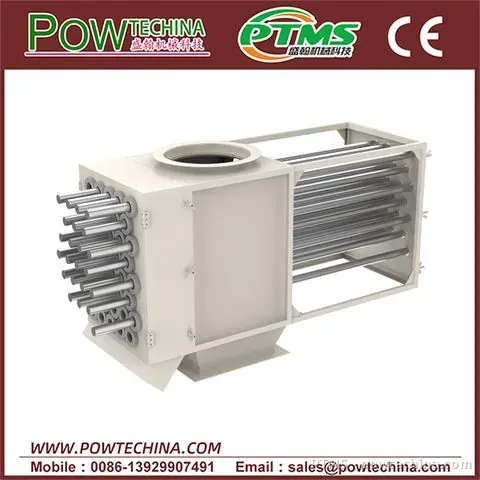
| Fine powder, gravity feed | Drawer / rod box: drawer-type separator | 25 mm rod up to 10,000 Gauss; 3, 5, 8 or 12 layer boxes; a cylinder pulls the rods so iron drops out without stopping the feed |
| Granules about 0.1–10 mm | Belt-type rare-earth roller: 3-layer belt separator | One-, two- and three-layer designs |
| Material on a belt conveyor | Dry drum and pulley magnets | One-, two- and three-layer designs for granular materials |
| Hoppers, chutes, pipelines | Magnetic racks and filter bars | Also magnetic bars and rollers in custom lengths and diameters |
| Fine, weakly magnetic iron in dry powder | Dry electromagnetic powder separators | Adjustable field; automatic iron discharge |
| Slurry | Wet electromagnetic slurry separators | Matrix flushed automatically with the field off |
Separation of ferrous parts from bulk product
The machines above are built to take ferrous particles out of bulk powders, granules and slurries. Strongly magnetic and coarse pieces are caught at low field, often by a permanent stage at the start of the line, while fine and weakly magnetic iron needs a second, high-intensity stage. Tell us the size and form of the ferrous pieces and the material they are mixed in, and we advise which stage applies.
Where to install
Place the first stage close to the source: after crushing for mineral lines, after milling for battery powders and ceramic glaze. On ceramic glaze and slip lines, install the electromagnetic separator after the slurry has been prepared and sieved and before it goes to storage or production, because iron particles left in glaze and slip show up as black spots after firing. See the ceramics application page.
Ferrous Cleaning and Separation of Bulk Materials: questions
How do I remove tramp iron from powder?
For gravity-fed powder and small granules, a drawer-type (rod box) separator holds ferromagnetic particles on permanent magnetic rods; a cylinder pulls the rods so the iron drops out of a separate port without stopping the feed. Finer, weakly magnetic iron needs a dry electromagnetic powder separator.
What is the strongest drawer separator field you publish?
The PTMS drawer-type separator is published at up to 10,000 Gauss on a 25 mm diameter magnetic rod, in rod boxes of 3, 5, 8 or 12 layers. Other specifications are confirmed for your application.
Which separator for iron on a belt conveyor?
Dry drum and pulley magnets are designed for belt conveyors in one-, two- and three-layer designs for granular materials.
Where should the separator be installed on a ceramic glaze line?
After the glaze or body slurry is prepared and sieved and before storage or production, since iron left in glaze shows as black spots after firing.
How do I separate ferrous parts from a bulk material?
Choose by material form and iron size: drawer or rack for gravity feed, belt or pulley for conveyors, electromagnetic for fine weakly magnetic iron. Send your material details or a 5–10 kg sample and we confirm the stage and model.
Related guides
Send us your material. We test it free.
Tell us your material, particle size, capacity and target iron level. We usually reply with a matched model and price within 24 hours.