
Guide
Silica Sand and Quartz Iron Removal for Glass and PV Glass
Glass, and especially solar (PV) glass, needs very low iron oxide because iron absorbs light. Magnetic separation is one of the steps toward that. This guide covers where the iron is and which machine fits sand, powder or slurry.
Where the iron is
- As liberated magnetic grains. Screening removes only these.
- As weakly magnetic mineral inclusions.
- As staining on grain surfaces.
- As mechanical iron picked up in crushing; if not removed it oxidizes within days and stains the sand red and yellow.
Machine by material form
| Material | Separator | PTMS models |
|---|---|---|
| Granular sand 0.1×0.1 to 10×10 mm (about 10–60 mesh) | Belt-type rare-earth roller separator, one, two or three layers | 3-layer belt separator |
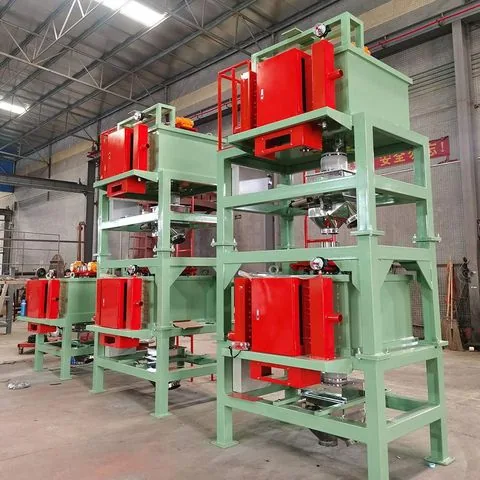
| Fine quartz powder | Dry electromagnetic powder separator | Double-discharge quartz powder separator, 7A300 |
| Quartz slurry | Wet electromagnetic slurry separator | Electromagnetic slurry series |
“Double discharge” means the powder is cleaned two times in one machine, so more iron is removed; the machine uses a water-cooling structure with copper pipe coils and runs fully automatically. The published working-cavity field of the electromagnetic dry powder machine is 18,000–30,000 GS; the dry powder 3K160–20K600 series is published at 2–3.5 T.
Where magnets sit in the line
Quartz production line: crushing, coarse magnetic separation (magnetic roller removes tramp and coarse iron), grinding and classification, fine magnetic separation, dewatering. High-purity pickling sequence: crushing, washing, magnetic separation, acid leaching, water washing, dehydration, drying. Magnetic separation comes before acid leaching to remove mechanical iron before it oxidizes. See Quartz Sand Pickling Magnetic Separation and the 200 t/day pickling plate-sand line.
Measured results we publish
Two sequential third-party assays on granular Indian quartz (GB/T 4734-2022, Foshan Youbo Ceramic Analysis & Testing Co., Ltd., reports H20260428115 and H20260428116) show Fe₂O₃ of 0.0088% and 0.0078%. They are published as measured values, not as a before/after iron-removal pair. See the quartz application page.
Silica Sand and Quartz Iron Removal for Glass and PV Glass: questions
Can magnetic separators reach the Fe₂O₃ level required for PV glass sand?
It depends on how the iron occurs in your sand. High-gradient magnetic separation is the step that moves suitable sand toward solar grade, but surface staining may also need washing or acid leaching. Send a sample and PTMS returns a measured result.
Which separator for quartz sand granules versus quartz powder?
Granules from 0.1 mm to 10 mm (about 10–60 mesh): belt-type separators with rare-earth rollers. Fine powder: dry electromagnetic powder separators such as the double-discharge quartz powder separator or the 7A300. Slurry: wet electromagnetic slurry separators.
Should magnetic separation come before or after acid leaching?
Before. The published pickling sequence is crushing, washing, magnetic separation, acid leaching, water washing, dehydration, drying. This removes mechanical iron from crushing before it oxidizes and stains the sand.
What does double discharge mean on the quartz powder separator?
The powder is cleaned two times in one machine, so more iron is removed. It uses a water-cooling structure with copper pipe coils and runs fully automatically.
Which separator suits quartz for glass making?
A dry electromagnetic powder separator such as the 7A300, which removes weakly magnetic oxides and flake-like surface contaminants.
Related guides
Send us your material. We test it free.
Tell us your material, particle size, capacity and target iron level. We usually reply with a matched model and price within 24 hours.